A working document, not a marketing claim
Sustainability is a moving target. This page is a snapshot of what we currently do, what we're still figuring out, and where we've fallen short. We update it twice a year.
Materials
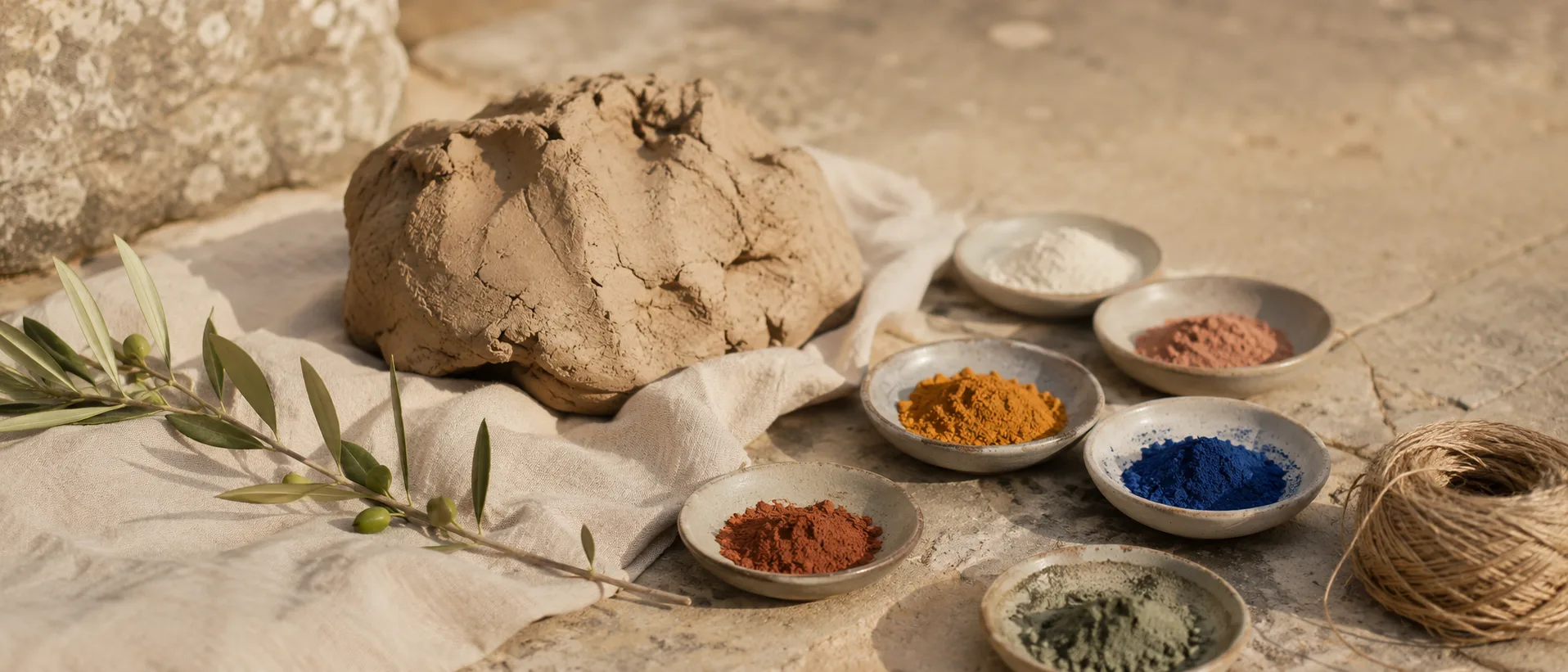
- Clay & glazes. Our ceramic makers source their clay regionally — most within 200 km of the workshop. Lead-free, food-safe glazes are a baseline requirement.
- Olive oil. Cold-pressed within 24 hours of harvest. Single-estate, single-varietal where possible.
- Linens & textiles. GOTS-certified organic cotton and European-grown linen. No synthetic blends.
- Baskets. Hand-woven from native reed, willow, and olive wood. No imported rattan.
Packaging
We ship in unbleached recycled cardboard with shredded-paper void fill. No plastic film, no air pillows, no polystyrene. Ceramics are wrapped in tissue paper printed with soy ink.
If a piece arrives broken, please email us a photo — we'll replace it and use the data to improve packing.
Shipping
We consolidate orders from each workshop into weekly outbound shipments rather than next-day air freight. Most orders take 7–14 days to reach you. We think the trade-off is worth it.
What we don't do yet
- We don't currently offset emissions for the last-mile delivery. We're researching credible partners.
- Some glazes still use cobalt; we're working with two of our makers on alternative blue pigments.
- Our website runs on Cloudflare's edge network, which uses renewable energy contracts — but we haven't audited the full supply chain.
Questions or corrections
If you spot something on this page that overstates what we actually do, please tell us. We'd rather be accurate than aspirational.